Saturday, June 16, 2012

Diesel fumes cause cancer, says WHO

Official label of 'carcinogen' means exhaust emissions should be treated in same league as passive smoking or UV radiation 


Associated Press
guardian.co.uk,


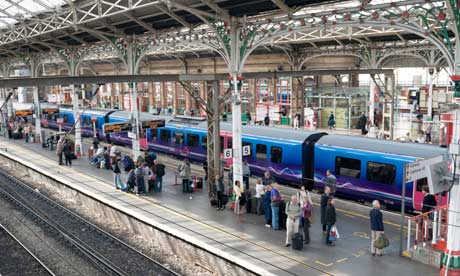
local commuter diesel train by the platform Preston railway station, Lancashire England UK

A diesel commuter train at Preston station: the WHO study said as so many people breathe in diesel fumes action needs to be taken. Photograph: Keith Morris/Alamy


Diesel exhaust causes cancer, the World Health Organisation has declared, a ruling it said could make exhaust as important a public health threat as passive smoke.

The risk of getting cancer from diesel fumes is small, but since so many people breathe in the fumes in some way, the WHO's science panel said raising the status of diesel exhaust to carcinogen from "probable carcinogen" was an important shift.

"It's on the same order of magnitude as passive smoking," said Kurt Straif, director of the IARC department that evaluates cancer risks, on Tuesday. "This could be another big push for countries to clean up exhaust from diesel engines."

Since so many people are exposed to exhaust, Straif said there could be many cases of lung cancer connected to the contaminant. He said the fumes affected groups including pedestrians on the street, ship passengers and crew, railroad workers, truck drivers, mechanics, miners and people operating heavy machinery.

The new classification followed a week-long discussion in Lyon, France, by an expert panel organised by the International Agency for Research on Cancer. The panel's decision stands as the ruling for the IARC, the cancer arm of the WHO.

The last time the agency considered the status of diesel exhaust was in 1989, when it was labeled a probable carcinogen. Reclassifying diesel exhaust as carcinogenic puts it into the same category as other known hazards such as asbestos, alcohol and ultraviolet radiation.

The US government, however, still classifies diesel exhaust as a "likely carcinogen". Experts said new diesel engines spew out fewer fumes but further studies are needed to assess any potential dangers. "We don't have enough evidence to say these new engines are zero risk, but they are certainly lower risk than before," said Vincent Cogliano of the US Environmental Protection Agency.

Experts in Lyon had analysed published studies, evidence from animals and limited research in humans. One of the biggest studies was published in March by the US National Cancer Institute. That paper analysed 12,300 miners for several decades starting in 1947. Researchers found miners heavily exposed to diesel exhaust had a higher risk of dying from lung cancer.

Lobbyists for the diesel industry argued the study wasn't credible because researchers didn't have exact data on how much exposure miners got in the early years of the study; they simply asked them to remember what their exposure was like. A person's risk for cancer depends on many variables, from genetic makeup to the amount and length of time of exposure to dangerous substances.

A US group that represents diesel engine makers said major technological advances in the last decade have cut emissions from trucks and buses by more than 95% for nitrogen oxides, particulate and sulfur emissions. Some experts said the new classification wasn't surprising.

"It's pretty well known that if you get enough exposure to diesel, it's a carcinogen," said Ken Donaldson, a professor of respiratory toxicology at the University of Edinburgh, who was not part of the IARC panel. He said the thousands of particles, including some harmful chemicals, in the exhaust could cause inflammation in the lungs and over time, that could lead to cancer.

But Donaldson said lung cancer was caused by multiple factors and that other things like smoking were far more deadly. He said the people most at risk were those whose jobs exposed them to high levels of diesel exhaust, like truck drivers, mechanics, or miners.

"For the man on the street, nothing has changed," he said. "It's a known risk but a low one for the average person, so people should go about their business as normal ... you could wear a mask if you want to, but who wants to walk around all the time with a mask on?"


Wednesday, May 23, 2012

City planners eye more public transport users by 2017

KUALA LUMPUR (May 22, 2012): The government and Kuala Lumpur City Hall (DBKL) aim to more than quadruple the number of daily commuters using public transport in Kuala Lumpur, to two million by 2017, from about 480,000 in 2010.
Federal Territories and Urban Well-being Minister Datuk Raja Nong Chik Raja Zainal Abidin said this would entail expanding current rail lines with additional coaches, adding bus lanes and instituting 'park and ride' facilities at rail stations.
"The government also has plans to improve existing bus lanes by installing barriers to separate them from the part of the road used by automobiles," he said when opening the Second National Conference on Greater Kuala Lumpur/Klang Valley themed 'Towards A World Class Sustainable City' here today.
In addition, he said the federal government was undergoing a detailed study for a high-speed rail link between Kuala Lumpur and Singapore.
He shared the sentiments of Rio de Janeiro's mayor Eduardo Paes who had said that cities of the future had to be environment-friendly.
"This is why, one of our Greater KL/Klang Valley initiative is to increase shaded areas in the city by planting more trees and introducing more open parks by collaborating with the private sector," said Raja Nong Chik, adding that Kuala Lumpur should not merely be about skyscrapers.
The minister said that holistic city planning often suffered from a sector-by-sector approach across competing jurisdictions.
"Across the major categories, we must look beyond air quality and carbon emissions, going all the way through energy consumption, land use and buildings, transport, waste, water sanitation and environmental governance to ensure that Kuala Lumpur is on the right path to a greener future," he said.
He further stressed that policymakers must not fail to see the city as a single entity.
At a press conference later, Raja Nong Chik urged the Selangor Goverment to give attention to water-related projects in the state.
Often, the approval of development projects were postponed because of water problems, thus affecting the Greater KL Plan, he noted. – Bernama

Saturday, January 14, 2012

How Behavior Programs Can Help Build an Energy-Efficient Culture

www.sustainableplant.com - January 11, 2012

Energy behavior programs aimed at reducing energy use through change in employees' attitudes and behaviors, such as those instituted at The House of Representatives and the Empire State Building, can help build an energy-efficient office culture, according to a report released by the American Council for an Energy-Efficient Economy (ACEEE). These programs also create benefits that extend beyond the workplace, as participants often become more energy conscious at home and in their communities.

One of the case studies examined, “Green the Capitol,” a program instituted by the House of Representatives, was recognized as a positive example of how government can deploy low-cost, low-risk energy initiatives to control its own energy usage through the change of its employees' attitudes and behavior toward energy saving.

The Green the Capital initiative promoted a comprehensive package aimed at reducing energy use, waste and the carbon footprint of the House of Representatives by switching electricity fuel from coal to natural gas, relighting the Capital Dome with compact fluorescent light bulbs, and promoting a series of behavior programs at offices such as turning off computers and other office equipment when not in use, carpooling, commuting by bicycle and recycling. Eighteen months after its launch, the Green the Capitol program had reduced the institution's carbon footprint by 74%.

The report also looked at four other energy behavior case studies across the U.S. and Canada, including the “Tenant Energy Management Program” in the Empire State building; “Conservation Action!” at BC Hydro, Canada; an energy behavior campaign undertaken at a provincial governmental building in Canada; and the “TLC – Care to Conserve” program at the University Health Network of the University of Toronto.

Four common intervention approaches were shared by the five energy behavior programs: (1) setting the tone with the support of upper management and its public pledge; (2) building a team with a project committee and peer champions on board; (3) utilizing communication tools such as e-mails, prompts, Web sites, public meetings and posters to reach target audiences; and (4) engaging building occupants by means of feedback, benign peer pressure and competition, as well as through performance-linked rewards.

The report suggests that the key benefits of energy behavior programs extend beyond the workplaces that undertake these programs. Often a change in participants' thinking and behaviors follows, and after participation in the program they may become more active in their own energy-saving practices.

“Participants in these programs may reduce their home energy use, or actively participate in or even organize energy conservation programs in their communities,” said Dr. Shui Bin. “They may act as agents for change within and outside of the organization, spreading energy-efficient behavior in other settings, leading to direct and indirect reduction of energy expenditure, energy use, and carbon emissions.”  
 

Tuesday, March 15, 2011

To the Peope of Japan - Our Thoughts and Prayers are with You

We wish you strength and resilience in over coming this great tragedy. God be with you.

Japan earthquake: £100bn bill for costliest disaster in world history

The Telegraph - 15 March 2011

The tsunami is expected to be the world’s most expensive natural disaster, with predictions that the repair bill will top £100 billion.

Japanese rescuers search for the victims of Friday's tsunami in Miyako Photo: AP

Hurricane Katrina holds the record, having caused damage estimated at £77  billion to the Gulf Coast of America in 2005.
But the company Credit Suisse predicted yesterday that the total cost of Friday’s earthquake and tsunami would be at least 14 trillion yen (£106  billion).
The disaster caused a 6.2 per cent drop in Japan’s Nikkei share index, wiping £90 billion off stocks and shares traded there. That in turn dragged share prices to a six-week low in many countries.
In Britain, the FTSE 100 index closed almost one per cent or £15 billion down, while the Dow Jones suffered a similar slump in early trading.
Andre Bakhos, the director of market analytics at Lek Securities in New York, said: “The earthquake could have great implications on the global economic front. If you shut down Japan, there could be a global recession.”
Other experts suggested that the tragedy would at least hinder worldwide recovery from the economic downturn.
The Bank of Japan responded by pumping a record £113 billion into the banking system to prop up confidence and meet demand for borrowing in the aftermath of the disaster. Japan was already struggling, with its national debt standing at twice national income and its economy shrinking in the last three months of 2010.
Dozens of factories were unable to open yesterday and many companies could not predict how long it would take to repair damage and restore supply lines.
Among the major businesses that could not operate factories were Toyota, Honda, Nissan, Canon, Nestle, Sony and Panasonic.
Need transport to Balik Kampung? Find a ride here
t
t